The average person spends 90,000 hours at work during their lifetime. For many of us, those hours are spent in an office, and the environment of that space has a profound impact on our happiness and health. There’s no denying that when you gather large groups of people together in a relatively small space, things can get grimy in a hurry.
The health dangers of a dirty office are many, and most people don’t know just how unclean their workplace is or what to do about it. We’ll take a closer look at the germiest places in the office and the danger they present, as well as give you some tips on keeping those health risk hot spots sanitary.
Health Risks Associated With Unclean Workspaces
When an office space hasn’t been thoroughly cleaned and sanitized in a while, health risks multiply at an alarming rate. These are just three of the most common health risks in an office environment where cleanliness and hygiene are falling by the wayside.
1. Clutter
It’s easy for unnecessary clutter to accumulate in an office, but most people don’t know it’s one of the health risks of an unclean work environment. There are two main sources of clutter: personal items and work-related materials. While having a few personal effects can make an employee’s space more comfortable and inviting, excess items can quickly start to become an issue. Add that to stacks of work-related materials like files and electronic devices, and you’ve got clutter.
Multiple studies on clutter have concluded that it’s bad for our mental health. The majority of studies look at the clutter we have in our homes, but it stands to reason that if it’s bad for us at home, it’s also damaging in the office. Some of the detrimental effects of clutter include:
- Lower self-reported well-being
- Unhealthier eating
- Increased stress
- Less efficient visual processing
- Less efficient thinking
We know that stress weakens the immune system, leading to increased incidences of illness. Especially during cold and flu season, clutter is a significant office health risk that’s often overlooked.
2. Viruses and Bacteria
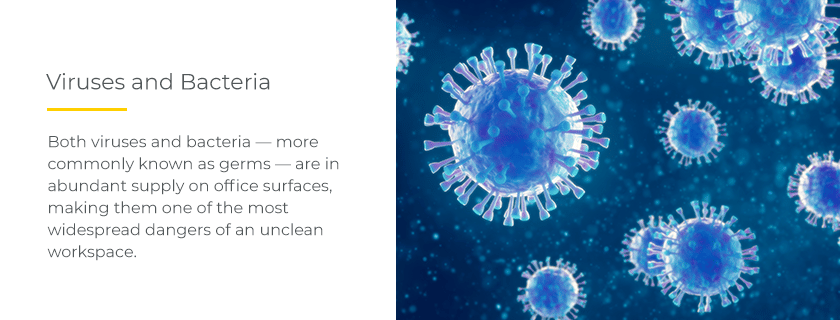
Both viruses and bacteria — more commonly known as germs — are in abundant supply on office surfaces, making them one of the most widespread dangers of an unclean workspace. A major study of more than 1,000 office workers found that two-thirds of employees who didn’t clean or sanitize their workspace regularly were exposed to harmful bacteria including:
- Escherichia coli
- Helicobacter pylori
- Pseudomonas aeruginosa
- Staphylococcus aureus
These bacteria cause a variety of illnesses, all of which are unpleasant for employees and lead to the headache of excess sick days for employers.
3. Mold
If questioned, most people would probably assert their workplace is mold-free. However, not all mold is visible as it tends to hide in places we don’t make contact with every day. Mold is a serious concern and can be a major hidden factor in “sick building syndrome.”
Sick building syndrome is the name given to the phenomenon of multiple people experiencing nonspecific symptoms that are alleviated when they leave the building. The most common symptoms are:
- Nausea
- Headaches
- Mental fatigue
- Skin irritation
- Dizziness
If an office space has a case of mold or other fungi, employees are much more likely to get sick from the spores that are released into the air. Mold is most common in areas with high moisture and exposure to water. Behind toilets and under sinks are common places to find it, making it one of the harder health risks of a dirty office to encounter.
Common Problematic Areas
So, where are the germiest areas in an office? You might be inclined to think it’s the bathroom, but that’s not the case. While the bathroom may have the most obvious gross factor, plenty of other hot spots deserve attention for their levels of contamination.
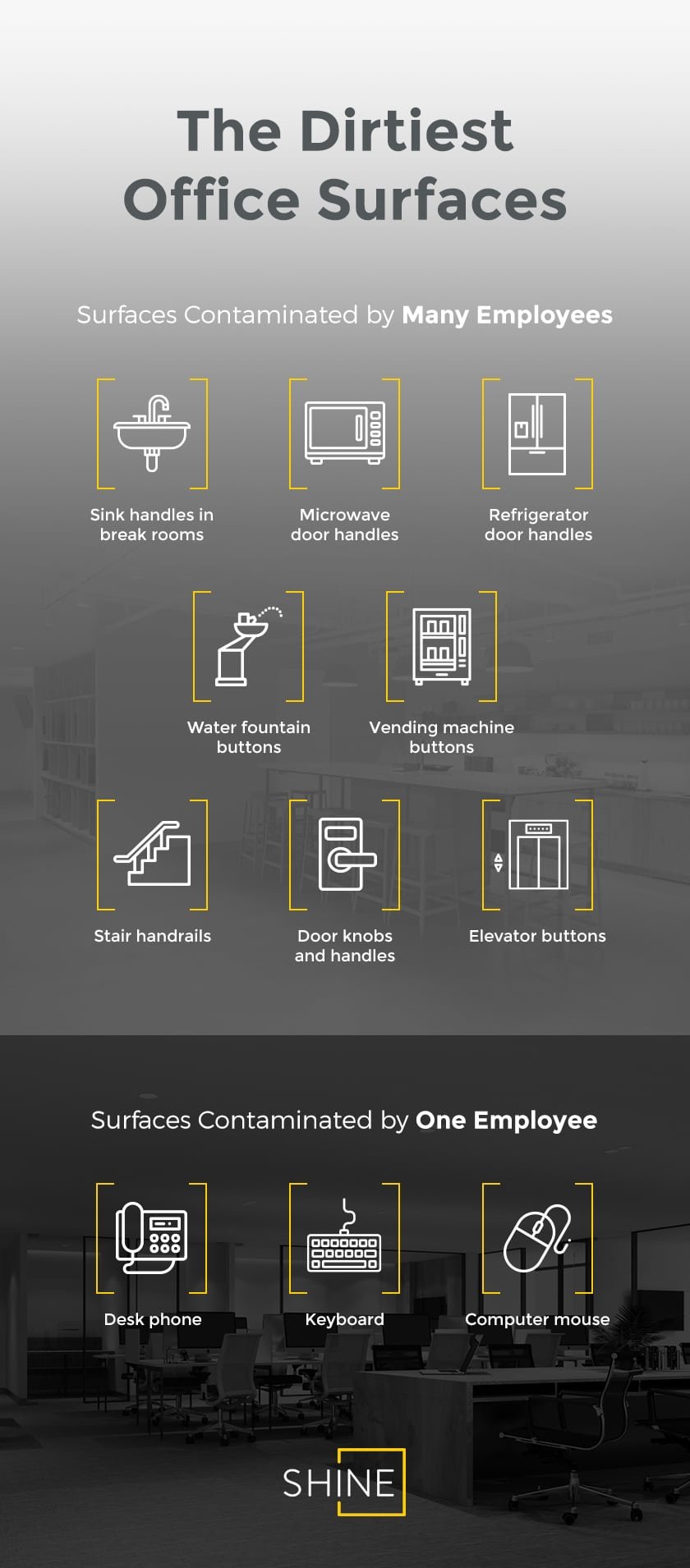
The largest study on this subject was carried out in consultation with researchers from the University of Arizona. Researchers swabbed almost 5,000 common office surfaces in buildings that were home to around 3,000 employees. They measured contamination with adenosine triphosphate (ATP), which is found in the cells of all living things. The higher the ATP level, the more likely the surface is to be crawling with germs. The dirtiest surfaces, with ATP counts of 300 or higher were:
- 75% of sink handles in break rooms
- 48% of microwave door handles
- 27% of keyboards
- 26% of refrigerator door handles
- 23% of water fountain buttons
- 21% of vending machine buttons
You may have noticed that the dirtiest places in the office are the ones where employees prepare and eat their food. Given that more than two-thirds of employees eat at their desk, it’s no surprise that these surfaces can be quite contaminated by just one person. The swabs from 51% of desk phones and 51% of computer mice had readings of over 100 ATP, indicating the need for better hygiene even in less communal spaces.
Carpets can quickly become one of the overlooked areas of an office that need cleaning. Although industrial carpeting is more durable than the carpet you’d have at home, it can still build up mold, allergens and dirt if it is not properly taken care of. Because office carpeting is often in neutral tones and patterns, it is often better-than-average at hiding dirt and contributing to health risks.
Benefits of a Clean Office
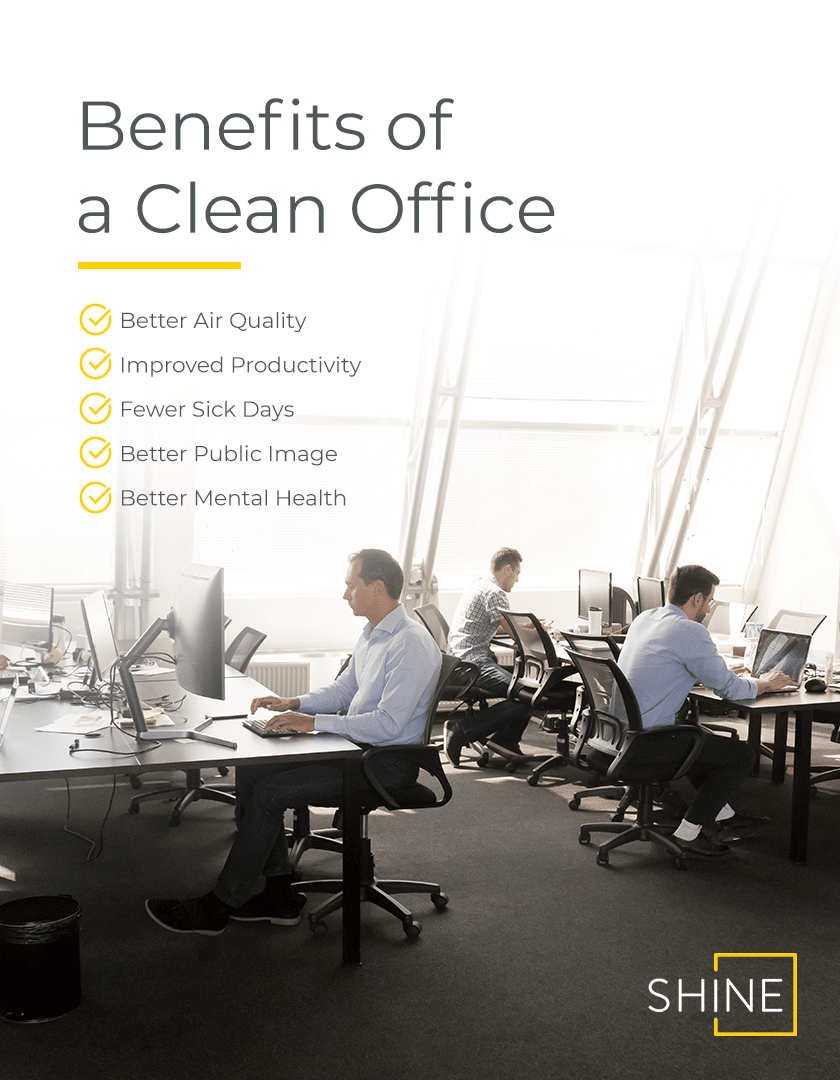
Aside from pure aesthetics, there are plenty of reasons to love a spotless office. These are five of the best clean workplace benefits.
1. Better Air Quality
Upholstered furniture, dusty hard-to-reach corners and carpets can result in significant decreases in air quality over time. Employees may not notice it consciously, but the allergens and irritants found in dirty offices can cause real issues. Once workers get in the habit of dusting or wiping down services and see the benefits of regular professional cleaning, the difference will be palpable.
Better air quality reduces symptoms like runny noses and coughs, and it can leave employees feeling more refreshed and clear-headed.
2. Improved Productivity
Employees in a clean office are simply happier. The physical environment someone works in has a profound effect on how they feel, which, in turn, affects how they work. Someone sitting in a cluttered and dusty cubicle won’t be able to breathe or think clearly, leading to reductions in productivity and increased stress.
One study found that people who feel overwhelmed by the clutter around them are more likely to procrastinate. Anyone who has tidied up a messy desk is familiar with the feeling of relief you get from having a fresh slate.
3. Fewer Sick Days
When one person gets sick in the office, a clean environment can help ensure their illness doesn’t spread. Given how often any one person touches the many handles and buttons necessary to do their job (or just get their morning coffee), it’s no surprise that workplace illnesses can spread so quickly. One study found that when someone comes in sick, around half of the most frequently-touched office surfaces will already be infected with the virus by lunchtime.
If a virus isn’t removed with a routine sanitization, it will continue to live on the surface for days — thereby increasing the chances of transmission to coworkers. Cleaning that includes wiping down door handles, the kitchen and the bathroom can reduce the number of transmissions and, therefore, the number of sick days employees need to take. This basic maintenance offers one of the most valuable health benefits of a clean office.
4. Better Public Image
Every office has visitors who need to be impressed. Dusty air, faint odors and general lack of cleanliness are surefire ways to keep your space from creating a good first impression. A clutter-free, fresh-smelling workspace will give clients and executives greater confidence in your business and create an inviting environment for building crucial relationships.
5. Better Mental Health
Every employer wants their employees to be happy and healthy on the psychological end of the spectrum as well as physical. It’s known that dirty environments can create or exacerbate symptoms of depression and anxiety, which isn’t good for the employee or their ability to work. Employees who are satisfied with the cleanliness of the office are more likely to contribute meaningfully and engage with their work. Being happy to walk into a healthy environment every day can increase employee loyalty, too.
How to Keep Your Office as Germ-Free as Possible
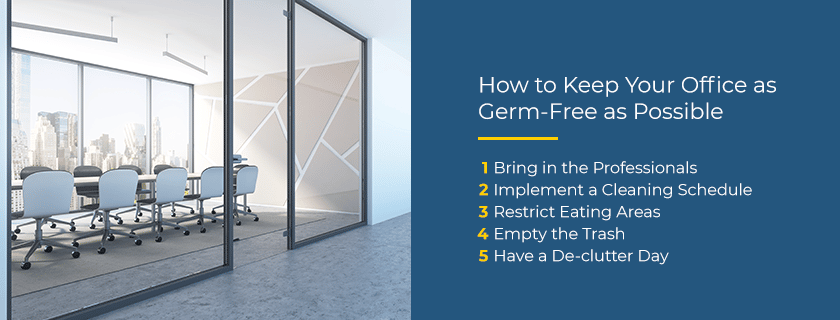
It’s impossible to remove all viruses and bacteria from any surface, but there are several things you can do to encourage a culture of cleanliness in the office and improve hygiene overall in the germiest places in the office. These tips can help if you’re wondering how to reduce germs in the office.
1. Bring in the Professionals
There’s nothing like a thorough office cleaning from a high-quality professional company. There are so many surfaces in an office that are overlooked for cleaning simply because there is not enough time for employees to complete it, or it’s simply impractical. For example, employees shouldn’t be expected to pull out a fridge to clean behind it or crawl into cabinets to make sure they’re spotless.
Professional cleaners know what it takes to make office surfaces sanitized and sparkling, and the difference will be clear.
2. Implement a Cleaning Schedule
Everyone in the office has a responsibility to help keep the space clean. Some employees may resent the idea of having to clean up after themselves and maintain basic cleanliness, but it’s essential for keeping germs and contaminants at the lowest levels possible.
While regular professional cleanings will give you the best results, having employees participate in basic maintenance and upkeep between cleanings makes a big difference. Develop a cleaning schedule that has each person complete a basic cleaning task like wiping down the kitchen or bathroom or sweeping the floors on a set schedule. In offices with many employees, not everyone may need to have a weekly task. Rotating tasks from week to week ensures no one feels unduly burdened, and everyone is doing their fair share.
3. Restrict Eating Areas
With so many people feeling the need to stay at their desk and eat so often, it may be challenging to change this habit. It helps if employees understand the amount of dirt and grime that can accumulate just from eating a couple of meals a week at their desk. Encourage employees to use the break or lunch room for meals and snack times to help reduce germs in the office.
This concept may be controversial at first, but it has benefits beyond decreasing the contamination risks for individual desks. Workers who eat cooped up in their cubicles are less likely to build rapport with coworkers. Eating in approved areas can increase face time between coworkers and possibly improve morale in the long run.
4. Empty the Trash
Trash is something that often gets neglected in offices, especially when professional cleaners are slated to collect trash on certain days. While that may be okay for the larger receptacles, there are usually countless smaller trash bins that can pose a health risk if they’re left to pile up.
People will often throw away bits of food as well as things like gum, which can become a breeding ground for bacteria incredibly quickly. Emptying the trash should be a daily occurrence. If there are an excessive number of trash cans and you find that most of them aren’t anywhere near full at the end of the day, it may be necessary to consolidate your collection. Reducing the number of trash cans is a good way to keep potential contamination in a limited number of areas and ensure they can be emptied without undue burden.
5. Have a De-clutter Day
A lot of times, people need some encouragement to reduce the clutter in their personal space at work. Much of the time, reluctance is due to the feeling that they don’t have enough time to sort through and remove items because they have so much to do. Making an event of it can be a great way to gently push employees toward de-cluttering their desks.
Scheduling a de-clutter day or half-day every quarter or at least once a year helps employees understand the importance of keeping a clean desk and work environment, and takes the pressure off them to do it themselves during small bits of downtime.
If you desire, you can increase the positive reinforcement by incorporating a reward into the practice. Giving out movie tickets or ordering lunch in might be just the motivation people need to refresh and clear their space.
Revitalize Your Office With Shine Facility Services
If your office cleaning solution is not meeting your needs or standards, Shine Facility Services is here to help. We bring our eco-friendly cleaning technology to all areas of your workspace, large and small. With third-party certified green services and supplies, you can feel confident knowing you’re getting all of the cleaning power without any of the harsh chemicals.
At Shine Facility Services, customer satisfaction is key. You’ll get a dedicated service representative, and you can contact us via phone call, email or text for your convenience. Our team understands the importance of professionalism and will always treat your workplace with the utmost respect.
When you need the utmost confidence in your janitorial services, turn to Shine. We are also proud to offer expansive facility management services for complete care of your business’ space. Call Shine Facility Services at (800) 698-3662, or contact us for a custom quote today.